The India Pakistan hockey vs cricket debate has gained new life in 2026. Hockey players shared high-fives, while cricket teams skipped their usual handshakes. That small contrast led to a much larger public debate.
Fans now ask why two major sports follow such different paths. Both contests carry deep history, pride, pressure, and huge public interest. Still, hockey found room for a short sign of respect. Cricket, however, kept a visible distance between the two sides.
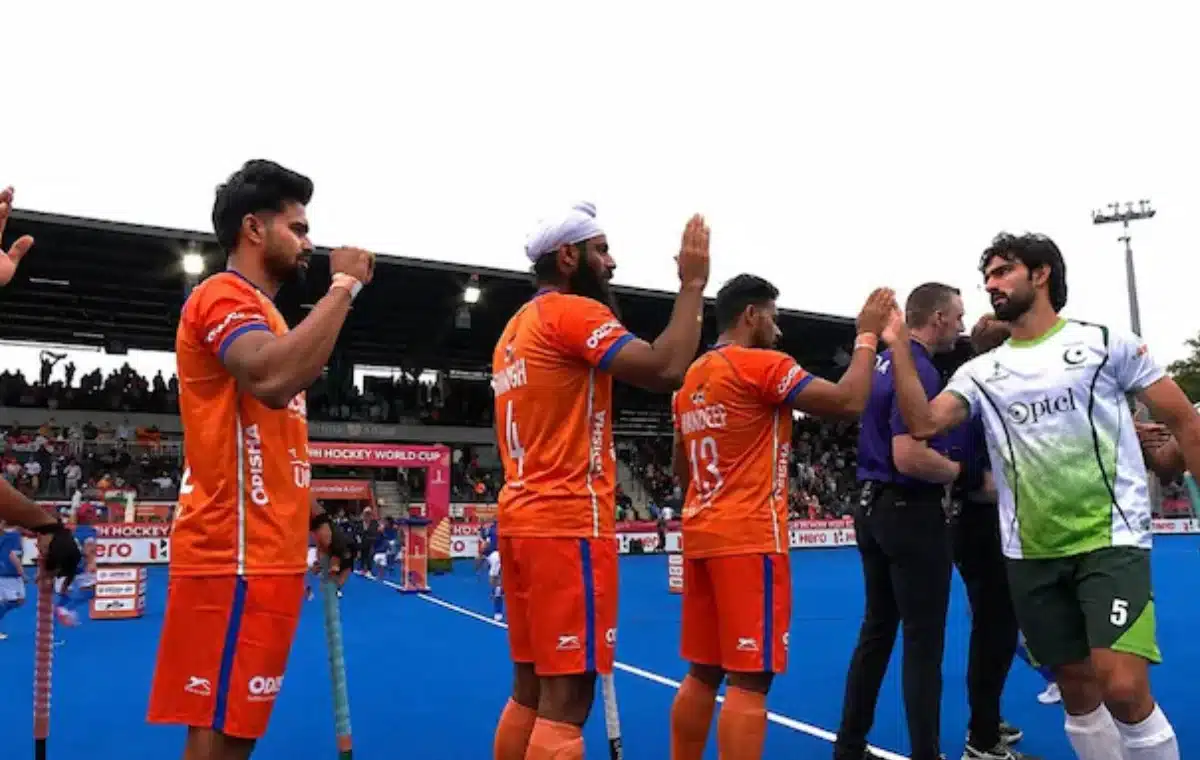
Spinmatch looks at what this difference means for athletes and fans. India beat Pakistan 5-3 in the Men’s Hockey World Cup match. The contest took place in Amstelveen on August 19, 2026. Before the match, both teams exchanged high-fives after the national anthems.
The actions caught fans’ attention because cricket had followed a different path. India had avoided handshakes with Pakistan in recent cricket contests.
A High-Five With Meaning
The India Pakistan hockey vs cricket story starts with a simple gesture. A high-five took only a few seconds before the World Cup contest. Yet, it showed that fierce rivals can still show basic respect. Neither side gave up its desire to win. Neither side lost focus before the first whistle.Instead, the players showed calm, control, and professional conduct.. Hardik Singh completed India’s five-goal total through a penalty stroke.Pakistan fought back more than once during the fast and tense contest. However, India held firm and secured a 5-3 win. The result helped India move into the second round. The high-five did not reduce the heat of the contest.
Both sides pushed hard for every loose ball and scoring chance. Players showed emotion, skill, pace, and strong national pride. However, they kept their actions within the spirit of hockey. That is why the moment matters far beyond one World Cup result.
Why Hockey Kept Its Tradition
Hockey has long valued greetings before and after major international contests. Players often share handshakes, fist bumps, or high-fives before the first whistle. These actions do not mean players ignore history or national concerns. They simply show respect for another athlete and the sport itself.
Hockey India did not ask Indian players to avoid Pakistan’s players. Reports said the federation backed Olympic values and world hockey practices. That stance gave players clarity before a highly watched international contest. They could follow a normal hockey custom without confusion or doubt.
The teams had also shared greetings during earlier youth hockey meetings. India and Pakistan players exchanged pleasantries at the Sultan of Johor Cup. They also followed similar customs during FIH Pro League events. Therefore, the World Cup high-five did not arrive without context.It followed a familiar path that hockey players already understood. This is the key point in the India Pakistan hockey vs cricket discussion. Hockey kept sport and politics in separate spaces during the contest. Players fought hard on the pitch while keeping basic respect intact. The teams did not need friendship to share a brief greeting. They only needed professionalism and a clear sense of sporting duty.
What The Hockey Moment Showed
| Part of the contest | What happened | What it showed |
| Before the first whistle | Players exchanged high-fives | Respect can exist before intense competition |
| During four quarters | Both teams fought hard for control | Courtesy does not weaken national pride |
| After full-time | Players shook hands | The result did not end basic respect |
| After India’s win | Players accepted the final result | Hockey values calm conduct under pressure |
The phrase sportsmanship in hockey vs cricket fits this moment well. Hockey players showed that respect can stay simple and brief. They did not turn the gesture into a grand public show. They simply followed a normal part of the sport.Then, they focused fully on winning for their country. Spinmatch sees a useful lesson in this approach. A respectful action can lower tension without lowering competitive standards. It can also help fans see athletes as people first. That matters most when emotion runs high on both sides.
Why Cricket Took Another Route
Cricket operates under very different public pressure during India-Pakistan contests. Each contest attracts huge crowds, strong media focus, and intense debate. A small action can become a major headline within minutes. Players face pressure from supporters, former athletes, officials, and commentators.
India’s cricket sides avoided handshakes with Pakistan after the 2025 Pahalgam attack. The approach began during the men’s Asia Cup that year. India then followed the same approach in later men’s contests. India’s women also avoided handshakes during their World Cup meeting.As a result, handshakes became a sensitive issue in cricket. The India Pakistan hockey vs cricket contrast does not blame one sport. Instead, it shows how each sport handles public pressure differently. Hockey teams kept their long-standing greeting custom in place. Cricket teams followed a more guarded approach during tense relations.Both choices came from very different situations and expectations. Cricket also holds a unique place in both countries. Millions of people follow every ball, run, wicket, and reaction. The rivalry brings huge emotion before teams even enter the field. Therefore, officials often view public gestures through a political lens.That leaves less room for players to act on personal instinct. Still, cricket can learn from hockey’s calm and measured example. A greeting does not mean teams agree on every issue. A handshake does not remove pain, anger, or serious national concerns. It only acknowledges another player’s professional role in the contest. That small act can protect dignity without changing anyone’s position.
Can Cricket Follow Hockey’s Example?
India vs Pakistan contests will always bring deep emotion and fierce support. That passion makes these meetings important for players and supporters alike. However, passion does not need rude conduct or personal distance. Teams can compete with full force while respecting clear sporting customs.
Cricket boards could set a simple and clear policy later. For example, captains could share a short greeting before formal procedures. Teams could also acknowledge each other after the final result. Officials could explain the policy clearly before a contest begins. That would protect players from needless public pressure and criticism.
No player should carry every political burden onto the field. The India Pakistan hockey vs cricket issue needs balance, not harsh judgement.Fans should not question loyalty because players offer a high-five. Likewise, fans should understand why cricket follows its current policy. Spinmatch believes clear rules can help athletes focus on their main role.Their role includes effort, teamwork, skill, discipline, and national pride. It should not include constant fear over a brief public gesture.
Final Thoughts
The India Pakistan hockey vs cricket debate goes beyond one high-five. It asks how athletes can show dignity during tense public moments. Hockey provided a clear answer during the World Cup in Amstelveen. Players shared respect, competed hard, and accepted the final result.Cricket may keep its current approach for now. However, hockey has shown another path remains possible. Spinmatch sees this moment as proof that respect strengthens great rivalries.
FAQs
Why did India and Pakistan hockey players exchange high-fives?
They followed a familiar hockey custom before their World Cup contest began.
Did India and Pakistan hockey players shake hands afterward?
Yes, players shook hands after India won the World Cup contest 5-3.
Why did Indian cricket teams avoid handshakes with Pakistan?
India’s cricket teams followed this approach after the 2025 Pahalgam attack.
Did the high-five reduce the intensity of the hockey contest?
No, both teams competed fiercely throughout a fast and highly competitive contest.
Can respect and rivalry exist together in sport?
Yes, hockey showed that athletes can compete hard while showing basic respect.